Montessori Pre-School
Key Facts
Our goal is to enable every child to flourish on their own terms: to shape his own destiny, to achieve her own greatness, and to create a strong foundation for a life of purpose and fulfillment.
We are a TUSLA recognised early years service with services eligible for ECCE, NCS and AIM funding schemes.
- Children aged 2 to 6 years
- From 8:45 up to 6pm (inc. after school service)
- 4 classrooms with maximum 22 children in each
- Qualified Early Years & Montessori teachers
- Fully Equipped Montessori Classrooms
- 38 week school year aligned to primary school
Curriculum Areas
The Montessori 3-6 curriculum is structured into five main areas. Each area is carefully crafted to support different aspects of a child’s development. Each of these areas is interconnected, contributing to the holistic development of the child, fostering independence, critical thinking, and a lifelong love of learning.
Practical Life activities are fundamental in the Montessori curriculum, focusing on skills that help children become independent and develop concentration, coordination, and a sense of order. These activities are divided into four main categories:
- Care of Self: Activities like dressing, washing hands, and preparing snacks.
- Care of the Environment: Cleaning, gardening, and caring for classroom materials.
- Grace and Courtesy: Social skills, such as saying please and thank you, and learning to interact politely with others.
- Control of Movement: Activities that improve fine and gross motor skills, such as pouring, threading, and balancing exercises.
The Sensorial area helps children refine their senses and develop cognitive skills. It involves activities that isolate and emphasize specific sensory inputs, such as:
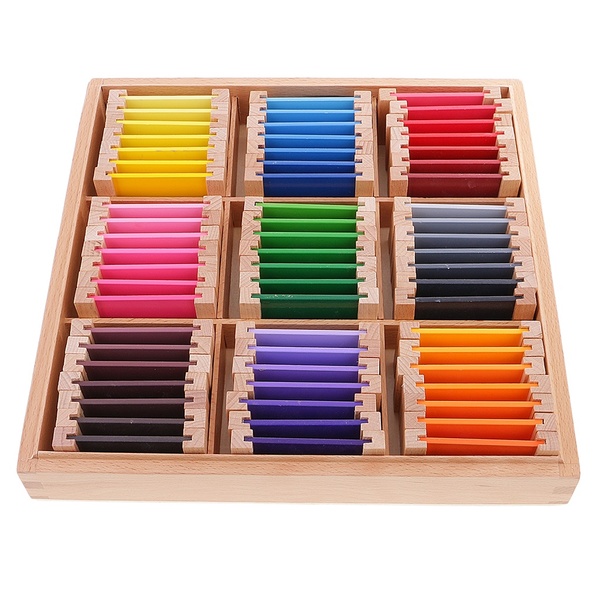
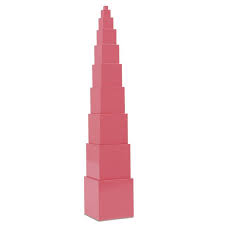
- Visual: Differentiating sizes, shapes, and colors with materials like the Pink Tower and Color Tablets.
- Tactile: Exploring textures and temperatures with the Touch Tablets and Thermic Bottles.
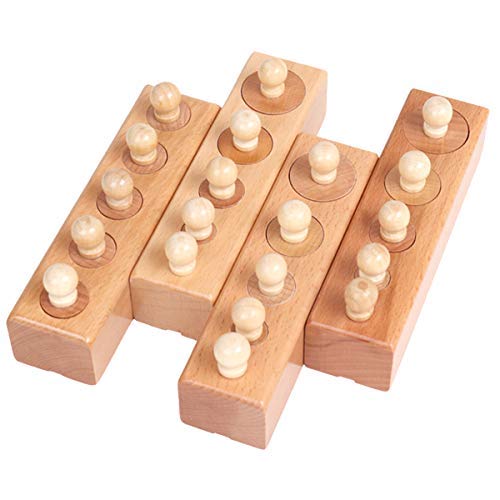
- Auditory: Differentiating sounds using materials like the Sound Cylinders.
- Olfactory and Gustatory: Identifying different smells and tastes through smelling jars and taste exercises.
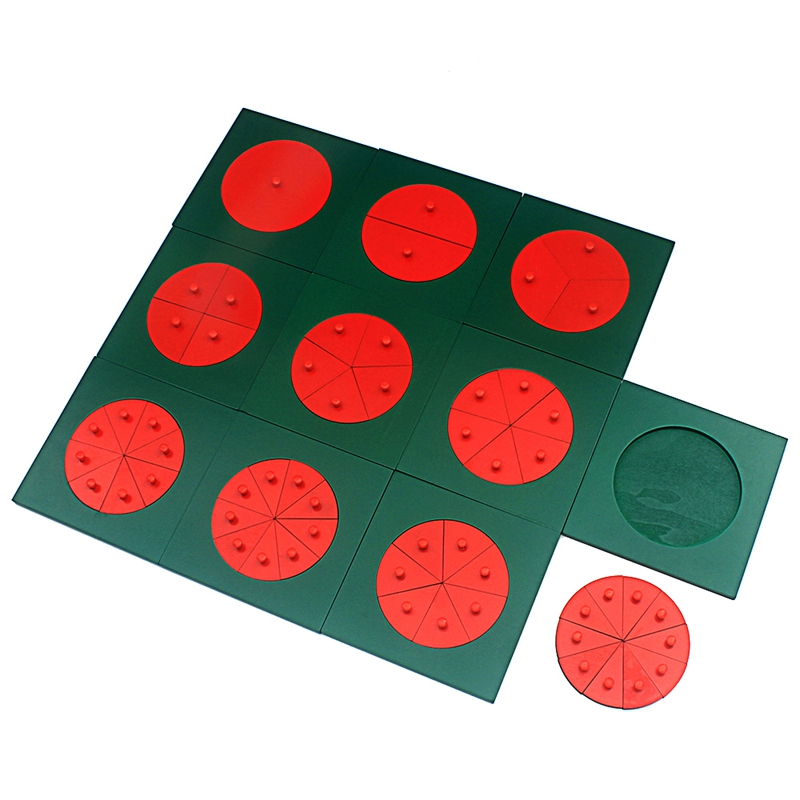
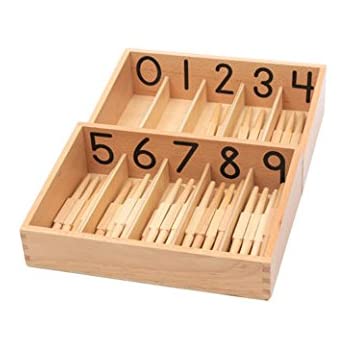
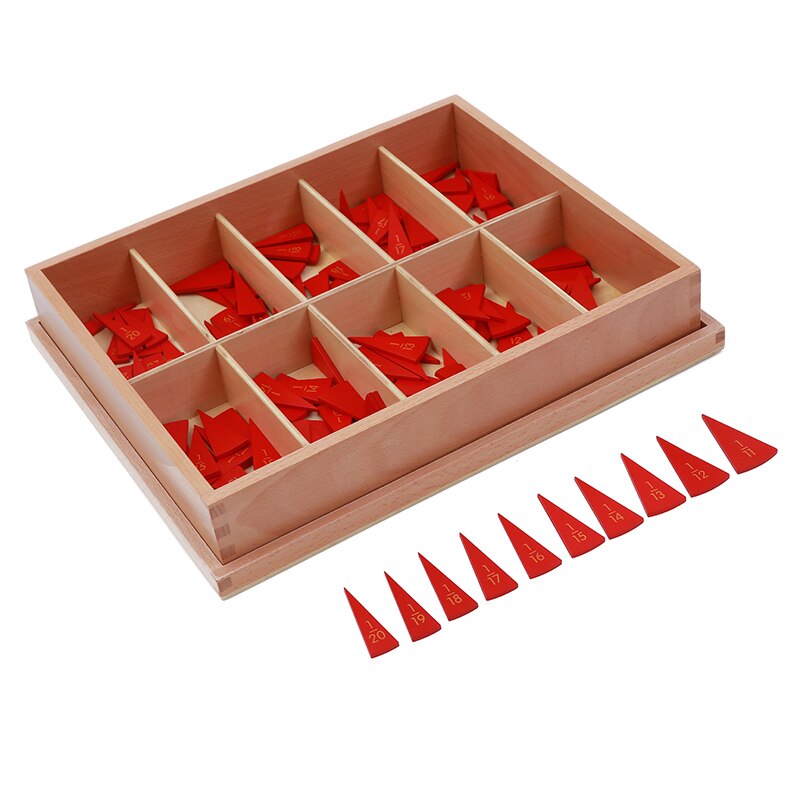
The Mathematics area introduces abstract concepts through concrete materials, laying a strong foundation for future mathematical learning. Key components include:
- Numbers to Ten: Learning to count and recognize numbers using materials like Number Rods and Sandpaper Numerals.
- The Decimal System: Understanding place value and the base ten system with Golden Beads and Seguin Boards.
- Linear Counting: Exploring concepts of counting beyond ten using materials like the Hundred Board.
- Operations: Performing basic arithmetic operations (addition, subtraction, multiplication, and division) using hands-on materials such as the Stamp Game and Bead Bars.
The Language area focuses on developing communication skills, both oral and written. It includes:
- Oral Language: Expanding vocabulary and improving speech through storytelling, songs, and discussions.
- Written Language: Learning to write through the use of Sandpaper Letters, Moveable Alphabet, and writing activities.
- Reading: Developing reading skills using phonetic exercises, reading simple books, and eventually moving to more complex texts.
- Grammar: Introducing parts of speech and sentence structure through hands-on materials and activities.
The Cultural area encompasses a broad range of subjects, introducing children to the world around them and fostering curiosity and respect for diversity. It includes:
- Geography: Learning about landforms, continents, countries, and cultures with puzzle maps and globes.
- Science: Exploring basic scientific concepts through experiments and nature studies, covering topics like botany, zoology, and physical science.
- History: Understanding time, history, and the passage of time with timelines and stories about historical events and figures.
- Art and Music: Encouraging creativity and appreciation for the arts through various art projects, music activities, and exposure to different musical instruments and styles.

Focus on Independence
Montessori education places a strong emphasis on nurturing independence and self-reliance in children. Through practical life exercises (like pouring water or buttoning clothes) and self-directed learning, children learn essential life skills and develop confidence in their abilities.

Diverse Proven Curriculum
Montessori schools prioritise the individual needs and interests of each child. With a curriculum that allows children to choose their activities and work at their own pace, your child can develop a sense of independence and intrinsic motivation for learning

Mixed Age Classrooms
Montessori classrooms typically have mixed-age groupings, allowing younger children to learn from older peers and older children to reinforce their knowledge by teaching younger ones. This dynamic fosters collaboration, empathy, and a sense of community among children.

Outdoor Play & Exploration
Spending time outdoors allows children to develop a deeper connection to the natural world. By exploring outdoor environments, children learn to respect and care for the Earth, leading to a greater sense of environmental responsibility as they grow older.

Concrete Learning Materials
Montessori classrooms are filled with specially designed materials that encourage hands-on exploration and discovery. Through activities like pouring, sorting, and manipulating objects, children develop their fine motor skills and gain a deeper understanding of concepts through direct experience.

Holistic Development
Montessori education values the holistic development of children, encompassing not only academic skills but also social, emotional, and physical growth. Teachers in Montessori schools observe and support each child's development across these domains, ensuring a well-rounded educational experience.